Why Summer Camp Costs Keep Rising and How Parents Can Save
 Jessie Feller
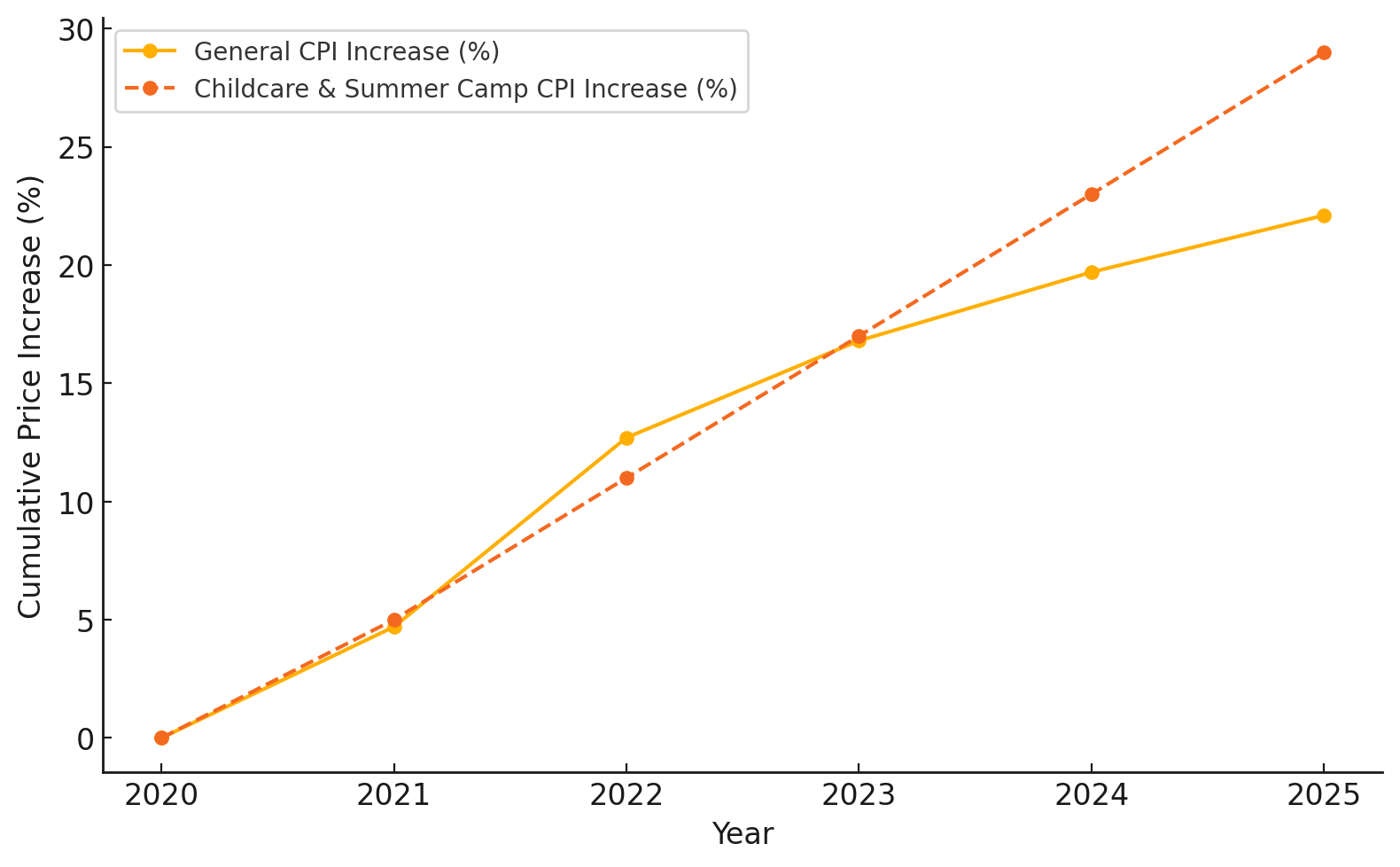
If you’re a parent, you’ve probably noticed that summer camp prices have steadily increased over recent years. You’re not imagining things—between 2020 and 2025, while overall U.S. inflation rose about 18–20%, costs associated with childcare, preschool, and summer camps increased even more, around 25–30%. Let’s talk about why this is happening and some practical ways you can manage these costs.
The U.S. Bureau of Labor Statistics tracks inflation using the Consumer Price Index (CPI). A specific part of this index, “Tuition, Other School Fees, and Childcare,” covers summer day camps and similar programs. This category has consistently shown higher-than-average increases, leading to the noticeable rise in camp fees.
What’s Driving the Increase?
Here are the main factors influencing rising camp costs:
- COVID-19 Safety Measures: Health protocols during the pandemic required smaller groups, more frequent cleaning, and additional staffing, increasing operational costs.
- Labor Shortages: To attract qualified staff during widespread labor shortages, camps increased wages and benefits.
- Increased Demand: After pandemic restrictions lifted, demand for summer camps rebounded significantly, putting pressure on limited available spaces.
- Staffing Requirements: Camps rely heavily on skilled staff, and mandatory staff-to-child ratios limit opportunities to reduce costs.
Unlike optional expenses, childcare and summer camps are often essential services for families. Even if your other costs have stabilized, the steady rise in childcare-related fees can feel more noticeable simply because these services are integral to family routines.
Practical Ways to Save
Fortunately, there are several strategies parents can use to manage summer camp expenses:
- Flexible Enrollment: Look for camps that offer part-time or day-by-day enrollment options to avoid paying for unused days.
- Half-Day Programs: These are typically more affordable and can be ideal for younger children or families with flexible schedules.
- Sliding Scale Pricing: Some camps adjust fees based on family income, making programs more accessible.
- Early Registration Discounts: Registering early in the year can often secure lower rates.
- Community Camps: Programs run by local governments, YMCAs, or nonprofit groups can offer excellent activities at lower prices, sometimes with financial assistance available.
- Scholarships and Discounts: Check for sibling discounts, payment plans, or volunteer-based discounts offered by camps.
- Tax Benefits: Utilize Dependent Care FSAs or Child and Dependent Care Tax Credits to offset some camp costs.
- Volunteer Opportunities: Some camps reduce fees if parents volunteer their time for various tasks.
- DIY Camps: Coordinate with other families to create informal, low-cost camps by sharing supervision and activities.
- Bring Your Own Supplies: Supplying your own snacks and materials can help avoid additional camp fees.
Putting It All Together
By using these practical strategies, you can help control summer camp costs effectively. While prices have indeed risen, being thoughtful about your camp choices ensures your kids can still have rewarding summer experiences without significant financial strain.